
The Dismantling Was Also My Job
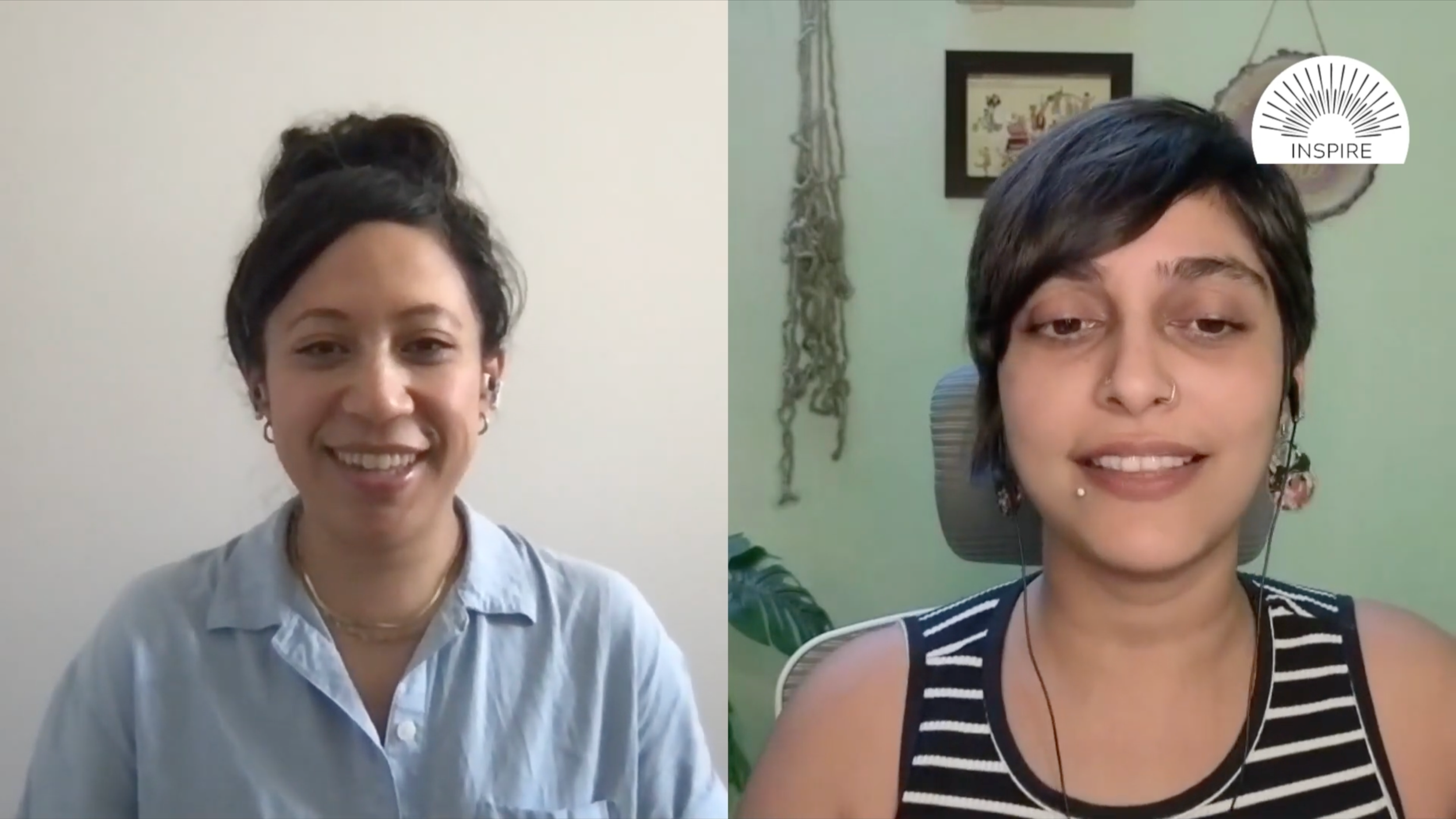
Image Source: Inspire Breathwork Podcast
Notes from a conversation with Ambar Surastri on breath, language, and the uncomfortable work of naming your own proximity to power
Ambar Surastri found sound before she found breath, and she found sound because she was frightened. A breast cancer diagnosis arrived in London, in the middle of the pandemic, at a moment when isolation meant walking into hospital appointments alone, dropped at the entrance by friends who couldn't come further. What she could still give herself, when almost nothing else was available, was presence. She went looking for ways to comfort her own nervous system and found sound baths, gong baths, frequency and vibration, and something in her opened toward a question she hadn't expected to be asking. Not just how do I survive this, but what would make my life actually meaningful if I do.
Breathwork came later, and almost by accident. She'd been searching for a modality to enrich her sound practice, seriously considering plant medicine as a way to help people reach unfamiliar parts of themselves, when she realized breath alone might do something just as profound, more slowly, without needing anything external at all. She went looking for a facilitator training in London, with no idea she was specifically looking for a decolonized one, and ended up at Inspire almost by luck. Reading through what the course actually stood for, she told me, she felt something close to relief.
What she said about the decolonial lens specifically is worth sitting with. It isn't a different breathing technique. It's a different relationship to certainty. She's openly critical of any space that announces itself as safe, because that claim quietly erases something true: safety isn't a property of a room, it's something that lives in a nervous system, and it can only really be decided by the person doing the breathing. A facilitator can hold space carefully. They can't promise an outcome they don't control. What they can offer instead is choice, real and ongoing, the freedom to change a breath pattern mid-session, to ask for the music to stop, to say no ten minutes into something they'd already agreed to. Consent, she said, isn't a single yes given at the start and carried through to the end. It's fluid, because we're fluid, and a practice that doesn't build in room for that fluidity isn't actually offering agency at all, whatever it calls itself.
The part of the training that hit hardest wasn't about the harm done to her. It was about the harm she'd unknowingly participated in. Working through the unit on power and privilege, she came face to face with something she hadn't expected to find: whiteness, in her words, running under her own skin. Not because she'd been shielded from the effects of a white-dominant system, she hadn't been, but because she'd built her success by climbing the same ladder that system offers everyone willing to play by its rules, and had never quite noticed she was doing it. She described sleepless nights over this, real grief, the specific pain of realizing that if we hold privilege, it exists at someone else's cost, and that the dismantling required wasn't work she got to assign to someone else. It was hers to do, in her own body, before she could credibly ask it of anyone else.
That reframing runs directly counter to a simpler story a lot of us reach for, oppressor here, oppressed there, and Ambar was clear that reality doesn't sort that neatly. You can be harmed by a system and still be propping it up in ways you haven't examined. Both things can be true in the same body at the same time, and noticing that, she said, is far more disorienting than the tidier version most of us were handed.
Language turned out to be one of the more unexpected threads in the conversation. Ambar speaks Dutch, Indonesian, and English, and she's become fascinated by how much gets lost, or gained, in translation, not just meaning but feeling itself. Someone once told her English was essentially built for accountancy, efficient, transactional, stripped of the poetic weight that other languages carry as a matter of course. She's watched this play out directly in her own facilitation, singing sessions where a line translated flatly into English lands as almost nothing, and then, sung in its original language, suddenly carries an entire emotional register English never had access to. It's made her think differently about capitalism itself as a kind of language, narrow, limited, built to describe transactions rather than meaning, and about writing, actual handwritten, imperfect, unassisted writing, as a small daily act of resistance against a world increasingly happy to let something else compose our thoughts for us.
Her current research thesis pulls several of these threads together, focused on why people from the global majority and people she calls neuroexpansive, rather than neurodivergent, often don't feel called toward breathwork spaces at all. What she's found, working closely with both groups, is less about willingness and more about design. Sessions built around a neurotypical nervous system simply don't land the same way for someone whose body processes safety differently, and most facilitators, she pointed out, have never been trained to notice the gap, let alone close it. She resists the language of disorder entirely here. People who process the world differently aren't missing something. They're often carrying access to forms of connection, to intuition, to environment, that a neurotypical nervous system doesn't reach as easily. The work, as she sees it, isn't fixing anyone to fit the room. It's rebuilding the room.
You can hear the full conversation between Suks and Ambar Surastri in Episode 7: Beyond the Mat - Integration in Everyday Life, on the Inspire Breathwork Podcast. You can find Ambar on Instagram at @ambarsurastri.
If this is a thread you want to keep pulling, Breathing Beyond Empire goes further into it, through breath, embodiment, and collective healing.
