
The Death of the People-Pleaser
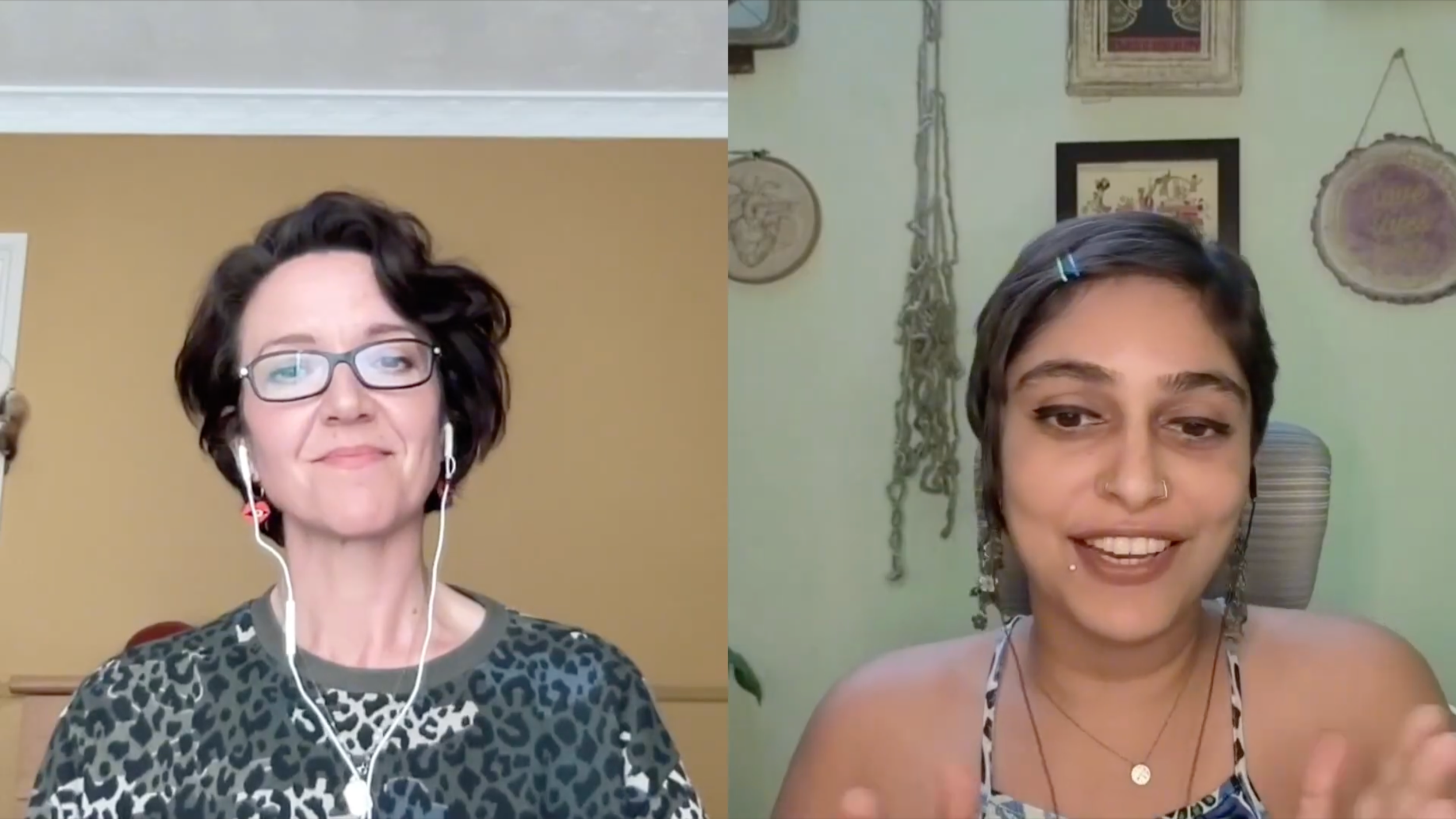
Image Source: Inspire Breathwork Podcast
Notes from a conversation with Pip Raine on theatre, freeze, and what it costs to keep reading the room
Pip Raine spent most of her adult life on stage or on cruise ships, and for a long time she loved it, genuinely, the live orchestra, the vibration of a room full of sound, the chance to be paid for something that felt like joy. But there's a detail she mentioned almost in passing that I haven't stopped thinking about. She had an agent. Someone who called with an audition, gave her a night to learn a script, two days to learn a song, and she'd drop everything, drop life, drop herself, to make it happen. Suks caught the wordplay in real time, mid-conversation, and it landed the way good wordplay does when it isn't trying to. An agent, quite literally, is what took her agency.
That's really what this whole conversation turned out to be about, underneath the theatre stories and the breathwork techniques. Not agency as a concept. Agency as something specific that got handed away, piece by piece, to other people's schedules, other people's visions, other people's idea of what her body should be able to do.
She used her body constantly in that world, dancing, singing, hitting choreography, and she told me plainly that she was completely dissociated from it most of the time. A choreographer would want a leg somewhere her body simply didn't go, and rather than say so, she'd push, night after night, show after show, until injury became just another cost of doing the job. That's freeze, she said, even though nothing about it looked still from the outside. Freeze doesn't always mean frozen. Sometimes it looks exactly like showing up, hitting every mark, performing competence while some other part of you has already left the building.
Her father's death is where breathwork actually entered her life, not gently. He had COPD, and he'd lost his voice, his literal singing voice, to a botched surgery years before he died. She sat with him for his last two weeks. Not long after the funeral, with the pandemic freshly stopping the whole world at the same moment her own world had already stopped, breathwork started showing up in her feed, over and over, until she followed it somewhere real. She's not usually a fan of algorithms, she told me, but she'll make an exception for that one.
What struck me most was how she described the freeze response once she'd actually started studying it, rather than just living inside it. It wasn't injuries alone, or anxiety, though both were there. It was a kind of power siphoned off into holding, into a voice she wouldn't use, into staying in a room her body was quietly begging to leave. She said something that's stuck with me since. She'd never had a loving, compassionate relationship with her own body until this work, and she'd never put herself through what she used to put herself through, ever again.
There's a practice from her training she initially hated, a pendulation exercise. You stand in an imagined circle of your own space, and three presences approach in turn. First someone who misunderstands you, dismisses your politics, doesn't believe in what you're doing. You notice what that does in your body, and then they leave, and you return to center. Then someone actively hoping for your downfall, worse than the first, and the same return. Then, finally, someone offering nothing but praise, cheerleading, real celebration, and you notice how that lands too, in your posture, your chest, before that leaves as well. Pip told her teacher flatly that she despised the exercise. The response she got back was that if a practice feels irrelevant, it's sometimes because you're already fluent in exactly the skill it's trying to build, and avoiding the harder direction on purpose. She hadn't wanted to face the people in her life who'd shown up that way, because facing them meant they became real again, rather than safely resolved in her own head.
Conflict itself, she said, used to be something she had no functional relationship to at all. She grew up around versions of it that were either loud and brutal or silent and unspoken, the kind that gets swallowed rather than repaired. What changed, slowly, through a course specifically built around sitting with conflict, was realizing that conflict with repair is actually a form of care, love in action, not a threat to the relationship but sometimes the very thing that proves it can hold weight. She still has a voice now in moments she'd have once gone quiet in, and she's learned to let both people in a disagreement feel discomfort without that discomfort meaning something has broken.
She was also blunt about something a lot of wellness spaces avoid saying out loud. No space, including hers, is inherently safe. She'd spent time in what she called whitewashed wellness spaces that promised safety as a given, and she'd learned the hard way what happens when people open up inside a promise like that without ever building real grounding of their own first. What she offers now instead is slower. Trust built deliberately, pace respected, safety understood as something cultivated together rather than declared at the door.
Her current research thesis, working with LGBTQ+ people and musicians, keeps circling back to something she didn't originally set out to study. People-pleasers keep finding her. She's only half joking when she says maybe the whole thesis should just be called the death of the people-pleaser. It's not a metaphor for her so much as a real, ongoing, unglamorous process, one she describes as having several installments rather than a single clean ending. Healing, she said, quoting something her own teacher had told her, doesn't always mean something gets fully resolved. Sometimes it just means giving it space.
You can hear the full conversation between Suks and Pip Raine, including a closing reading of Mary Oliver's poem "Wild Geese," in Episode 6: The Inner Medicine: Cultivating Personal Agency (The Breakthrough), on the Inspire Breathwork Podcast. You can find Pip on Instagram at @pipraine.
If this is a thread you want to keep pulling, Breathing Beyond Empire goes further into it, through breath, embodiment, and collective healing.
