
Breathing & Anxiety Regulation
Quick Answer
If you're anxious about the state of the world right now, that response makes physiological sense, it's not a personal malfunction. The fastest way to interrupt it: extend your exhale beyond your inhale. A 4-second inhale, 6-second exhale, repeated for 3–5 minutes, activates the parasympathetic nervous system and measurably slows heart rate. Full technique and the reasoning behind it below.
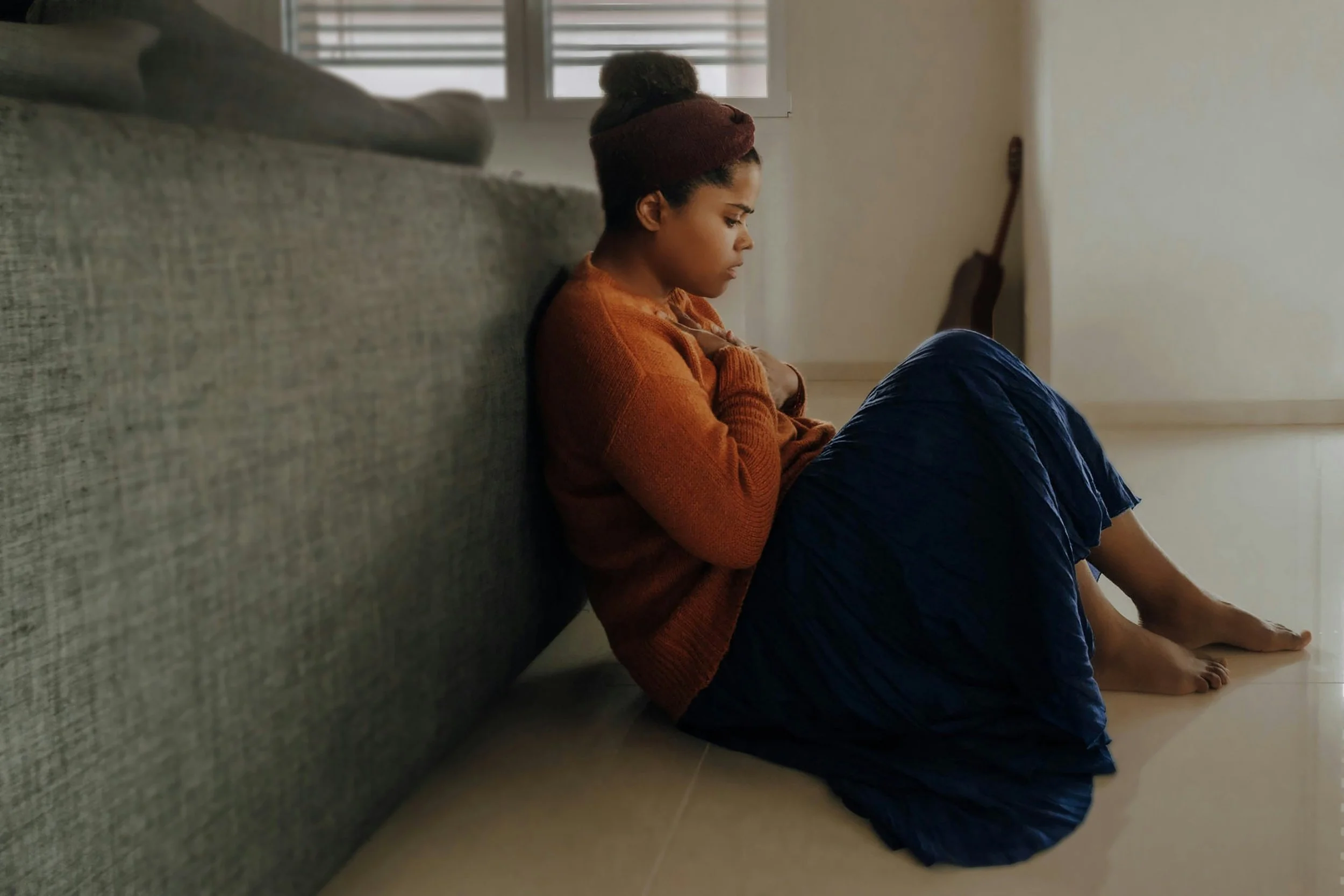
Many people experience anxiety, anger, or overwhelm right now and assume something is wrong with them. In my work with clients, that assumption is often the first thing worth challenging because sometimes these feelings aren't irrational at all. They're responses to the world we're actually living in. Global conflict, economic instability, poverty, political polarisation, and climate crises are constant, and the body doesn't distinguish well between "this is on my phone" and "this is happening to me."
That constant flow of information contributes to worry, emotional exhaustion, sleep disruption, and a persistent sense of being on edge. When the nervous system stays in a prolonged state of alertness, the body struggles to return to calm on its own and this is exactly where breath becomes useful, because it's one of the only automatic bodily processes you can also consciously override.
What is Anxiety, Actually
Anxiety is a natural human response to stress or perceived danger - part of the body's built-in fight-or-flight system, which prepares us to react quickly to potential threats (Mental Health Foundation, n.d.).
Most people experience anxiety situationally, such as before an important event, a big decision, a hard conversation, and in those moments it's functional: it keeps you alert and motivated. The problem isn't anxiety itself; it's anxiety that becomes persistent, disproportionate, or constant, at which point it starts interfering with daily functioning and can develop into a diagnosable anxiety disorder.
Anxiety shows up physically as much as mentally, with a racing heart, shortness of breath, restlessness, and stomach discomfort. That physical component is exactly why breath-based tools work on it directly, rather than only working on it through thought.
Why Breath Is the Lever
When the body perceives a threat, breathing becomes faster, shallower, and more irregular as part of the stress response. That's adaptive in short bursts that are useful if you actually need to run or fight, but if it continues for extended periods, it intensifies the very feelings of anxiety, dizziness, and tension it was meant to help you survive.
The reverse is also true, and it's the part most people don't realise: you can run the sequence backwards. Slow, steady breathing lowers heart rate, reduces physiological arousal, and supports emotional regulation, largely through parasympathetic (vagal) activation. Practiced regularly, it's one of the few tools that works on anxiety at the physiological level rather than only the cognitive level - which matters, because in my experience, most people trying to "think their way out of" anxiety hit a wall precisely because the body hasn't gotten the memo yet.
A Simple Breathing Practice for Anxiety Regulation
Longer, slower exhales specifically activate the parasympathetic nervous system - the branch associated with rest, recovery, and regulation. This is the single most reliable lever in daily-hygiene breathwork, and it's the one I come back to with clients more than any other.
Grounding Breath Practice
Sit comfortably and let your shoulders soften.
Inhale slowly through your nose for 4 seconds.
Exhale gently through your mouth for 6 seconds.
Keep the exhale longer than the inhale — that ratio is what does the work.
Continue for 3–5 minutes.
The extended exhale signals to the body that it's safe to slow down. Over repeated use, this shifts the nervous system's baseline, not just the moment you're in.
Regulation Isn't the Same as Indifference
I want to be direct about something people often get wrong here: regulating anxiety does not mean ignoring the world or becoming numb to what's happening in it. Caring deeply about injustice, conflict, or instability is very often why the anxiety is there in the first place, it's not a bug to be regulated away.
What regulation actually creates is the capacity for sustainable engagement. A nervous system running in constant threat-response doesn't make better decisions or sustain activism longer; it burns out faster. Calming the body creates the conditions to respond from clarity and steadiness instead of purely from fear or overwhelm, which is what lets people stay engaged with what they care about for longer than a few weeks.
Where You Actually Have Agency
Global systems are, by design, mostly outside individual control, but the nervous system responds to what's immediate and personal, not to scale. A few places where small, consistent choices do register physiologically:
Make space for genuine rest and joy. A nervous system that never receives a safety signal never downregulates. Time with people you trust, time outdoors, and creative activity all function as literal safety cues to the body, not just "self-care" in the abstract.
Set real boundaries on news and social media, rather than passive endless scrolling. The issue isn't staying informed, it's a threat-response system that never gets to switch off.
Practice saying no. Chronic overcommitment is a nervous-system cost most people don't account for until they're already depleted.
Where it fits your values, reduce reliance on specific products, services, or systems you're uncomfortable with. This is less about global-scale impact and more about closing the gap between what you believe and how you're living. That gap itself is a source of chronic low-grade stress for a lot of people.
None of these fix the world. They do give the body repeated evidence that safety is still possible, which is a precondition for staying engaged rather than shutting down.
Anxiety, in a world with this much genuinely happening in it, can be a sane response rather than a personal failure. Rest, boundaries around information, and a breath practice you actually use, not just know about - are what let people stay engaged without being flattened by it.
Try to reduce the anxiety with our Free Guided Breathwork, here.
Read More:
Sources referenced
1. Mental Health Foundation - definition and mechanism of anxiety:
