
A Black Woman's Rest Is a Political Act
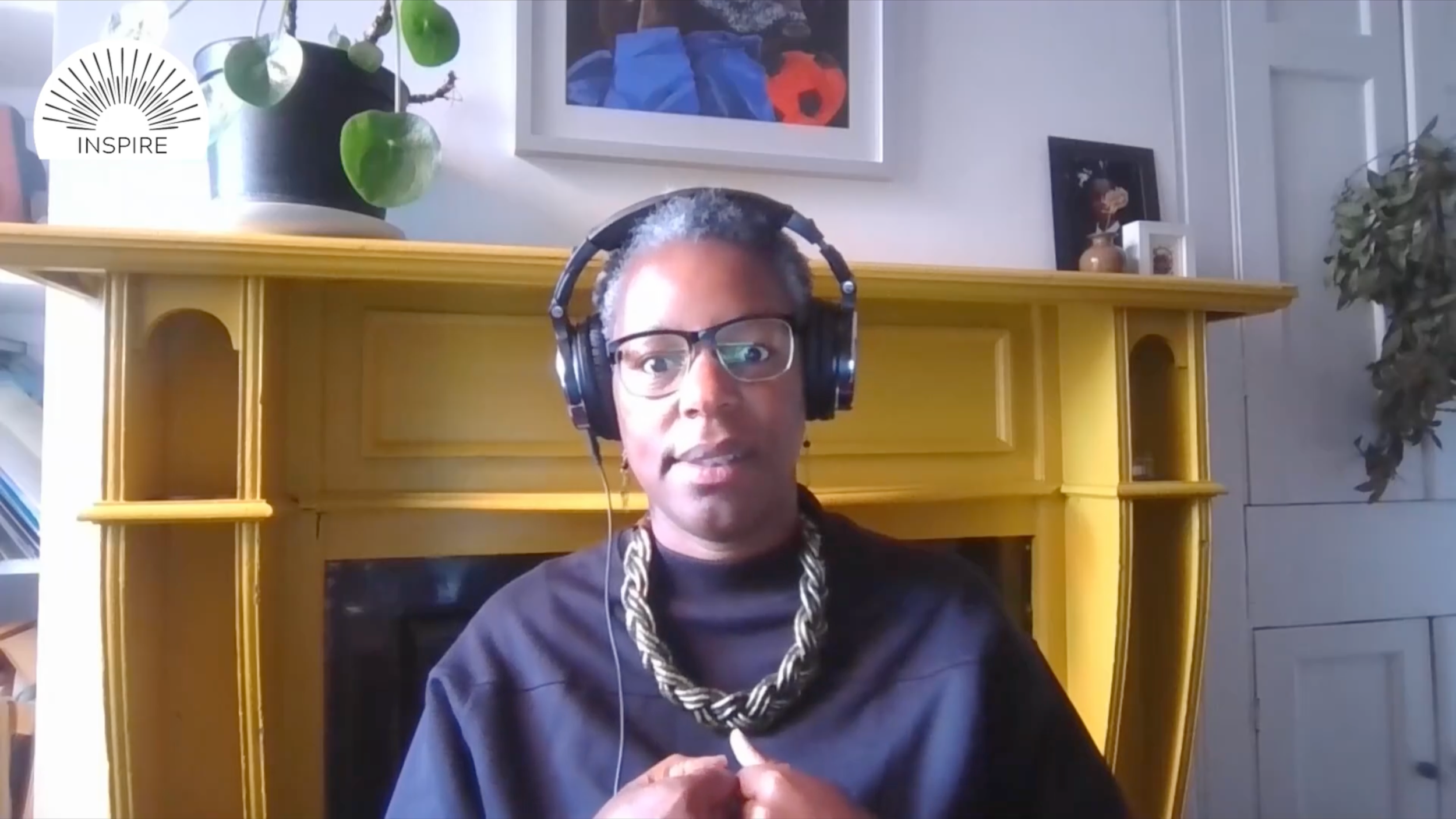
Image Source: Inspire Breathwork Podcast on YouTube
A listener's reflection on Episode 4 of the Inspire Breathwork Podcast, with Nicola Griffiths
Nicola Griffiths found breathwork the way a lot of people did, during the pandemic, half out of boredom, half hoping it might be relaxing. One session took her somewhere she hadn't expected. Space, galactic, a sense of diving into something so total it scared her, and she had to pull herself back out. She'd changed nothing but the pattern of her own breath, lying in her bedroom, and it had been powerful enough to frighten her and fascinate her in the same instant.
That's not where the real story starts, though. It restarts years later, in perimenopause, not feeling great, looking for support, and running straight into the same wall a lot of women of colour hit when they go looking for care. Everything that looked genuinely good was priced out of reach, and almost nobody teaching it looked like her. When she found Hannah's decolonial breathwork training, her heart sang. She messaged her husband immediately. Look, look, look at this. Two months later she'd enrolled.
What she wasn't prepared for was how unmoored the course itself would leave her feeling, at least at first. Working through lineage and ancestry as part of the training, she came up against a wall a lot of people with fragmented or displaced histories know well. She knows her parents, her grandparents, roughly her great-grandparents. Beyond that, it dissolves into somewhere in West Africa, unnamed. She started calling the feeling untethered.
What brought her back wasn't a genealogy chart. It was breath itself. Somewhere in the regular practice built into the course, it occurred to her that she was breathing the same air her grandmother breathed, and her grandmother's grandmother, all the way back past any name she could recover. A kind of pre-colonial breath, she called it, something that held her to a lineage even when the names themselves were lost. That single realization did something a family tree couldn't. It gave her an anchor that didn't depend on knowing.
From there, her actual practice took shape. She began holding spaces exclusively for women of colour, eventually building a structured course she called the Mother Series, working through the body region by region, the throat, the chest, what each one was holding. What kept coming back to her, session after session, wasn't fatigue in the ordinary sense. Women were falling asleep in her sessions, and it wasn't about a bad night's rest. It was a deep-seated exhaustion, the kind that comes from navigating systems that were never built to hold you, one most of the women hadn't had space to even name before, let alone examine. She started asking a simple question in session. Can you give yourself permission to rest here. People told her afterward how much that landed, because permission wasn't something they'd realized they'd been withholding from themselves.
The throat came up again and again, hers included. That specific tightness, the swallowed thing, showed up in her own body as a physical drop, the stomach-lurch feeling of going over a hill too fast, whenever she found herself in a moment where the old framework, the code-switching between two households, two versions of herself, one for her mostly white school and one for her Jamaican and Trinidadian family, was speaking loudly. She grew up holding both at once, quietly wondering, as a teenager, whether she'd ever meet a partner who could move between both worlds the way she'd had to learn to.
There's an image from this episode that's hard to shake. The busyness of daily life, she says, is oil, floating on top. Breath is the water underneath. Most of the time we live entirely in the oil, managing the visible layer, without ever dipping a finger through to what's actually there beneath it. Breathwork, done properly and unhurried, is what lets you touch the water at all.
And numbness, she explains, isn't the absence of that water. It's Hannah's teaching, passed on to her and now to the women she holds space for. Numbness is a sensation too. Not nothing, but a form of protection, doing exactly the job it was built to do, keeping something vulnerable, something soft, out of reach until it's safe enough to surface. Reframed that way, numbness stops being a failure to feel and becomes evidence of a body that once had good reason to shut a door, and simply hasn't been told yet that it's safe to open it again.
Her own hardness, the thing she's spent years trying not to hand down, she locates plainly. Little crying, a lot of holding, a strong exterior built and maintained because generations before her needed exactly that to survive. Her son, she says, is far more expressive than she ever learned to be, and she's building him room to stay that way, even when her own defaults, tired, stressed, pull her back toward shutting a conversation down rather than making space for his. She catches herself doing it and hates it every time, precisely because she knows exactly where it came from.
What she says near the end is the part that's hard to shake. That rest, real rest, into-the-bones rest rather than simply not being tired, is a political act for a Black woman in a way it might not read as for someone else. She describes it as a tiny cut, each time a woman is given genuine permission to stop, into a system built to keep her in motion. Enough tiny cuts, she says, and eventually you get somewhere real. Not by building capacity to hold more, which she's careful to name as its own kind of trap, a capitalist logic smuggled into the language of healing, but capacity to simply be with yourself, undemanded, for a while.
Asked what she'd want to encode in whoever comes after her, she doesn't hesitate. Fullness. The full, unshortened expression of who you actually are, out loud, without the two-household calculus she grew up running instinctively. If that's the only inheritance she manages to leave behind, she says, she'd be happy with that.
You can hear the full conversation between Suks and Nicola Griffiths, including a reference to Titilope Sonuga's poem "From a Place," in Episode 4: Woven into the Bone: Biology, Ancestry, and the Path to Grounding, on the Inspire Breathwork Podcast. You can find Nicola's work at Grown Ass Women Collective or on Instagram @grownasswomencollective.
If this is a thread you want to keep pulling, Breathing Beyond Empire goes further into it, through breath, embodiment, and collective healing.

