
Teaching conscious connected breath: where to actually start
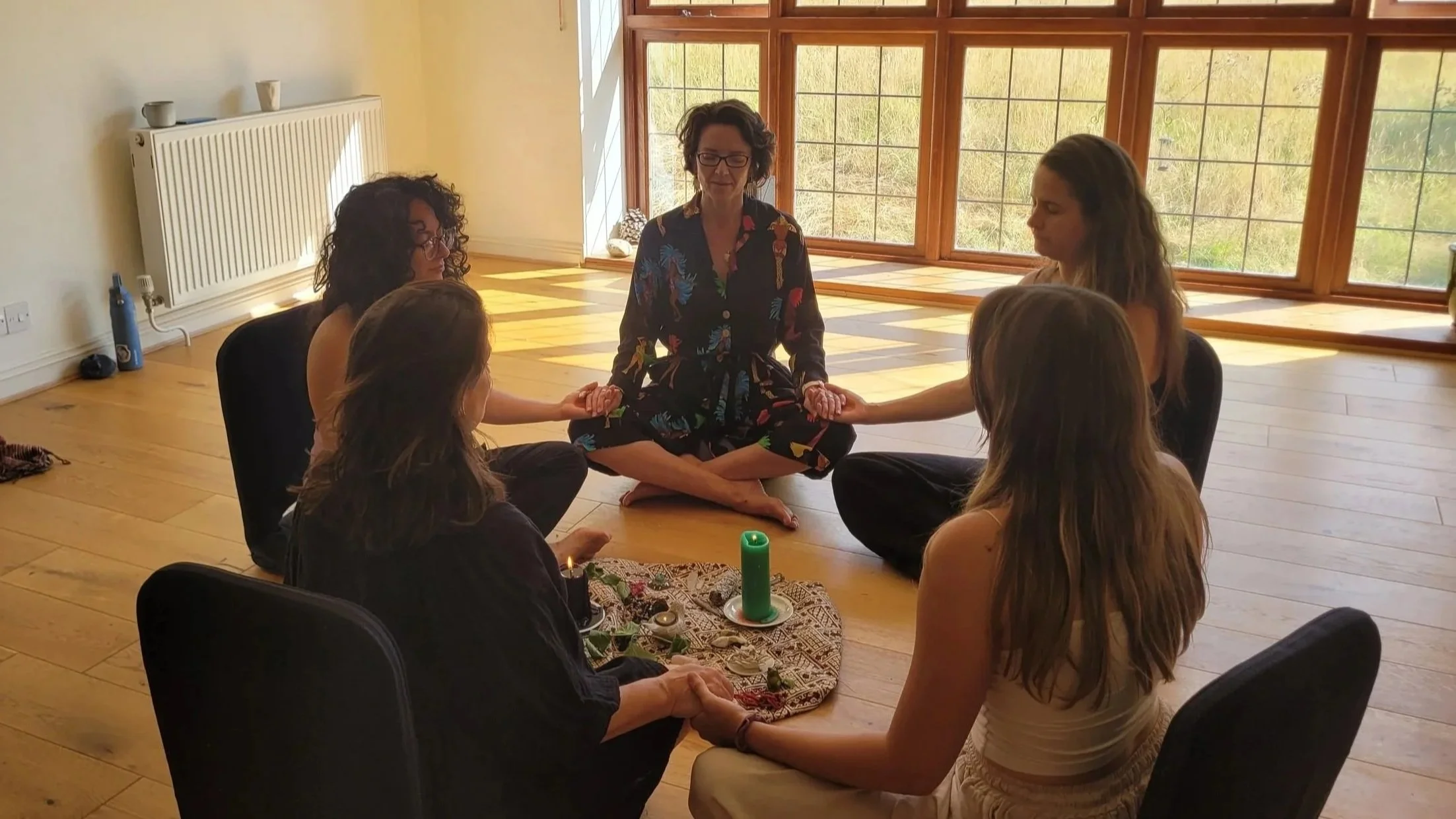
You are already breathing, and at some point in your own conscious connected breathwork practice, a different question tends to show up. Not "what is this doing for me," but "could I hold this for someone else." If that question has started following you around, here's a practical, honest place to begin.
Start with your own practice, not a curriculum
It's tempting to go looking for a training programme the moment the idea takes hold. Resist that for a while. The first real requirement for teaching CCB is time spent inside your own practice, session after session, long enough to know your own patterns, your own edges, what genuinely settles you and what doesn't. You cannot hold a doorway for someone else if you haven't walked through it yourself, repeatedly, in different states, on different days. This isn't a box to tick before training starts. It's the actual foundation everything else gets built on.
Understand what you're actually working with
Before you think about facilitating, get genuinely clear on the mechanism. CCB works by shifting the balance of oxygen and carbon dioxide in the body through continuous, connected breathing, and that shift is directly correlated with the altered states the practice is known for. Knowing this isn't academic. It shapes how seriously you take screening, pacing, and aftercare once you're the one holding space, rather than treating the pattern as a simple relaxation technique. Our guide to what conscious connected breathwork actually is is worth reading properly, not skimming, before you go further.
Learn who this isn't right for
Teaching CCB means becoming the person responsible for screening, not just the person breathing. That means genuinely understanding contraindications, epilepsy, panic disorder, a history of fainting, certain cardiovascular and respiratory conditions, pregnancy, rather than vaguely knowing they exist. A facilitator who can't confidently answer "is this safe for this specific person" before a session starts isn't ready to hold one yet.
Get trained by people who actually hold this well
Self-taught facilitation is one of the more common ways this field causes harm, not through bad intentions, but through gaps nobody flagged in time. Real training covers far more than the breath pattern itself, contraindications and screening, trauma-informed facilitation, how to hold space without projecting your own interpretation onto someone else's process, and how to respond when someone is in genuine distress rather than simply having an intense experience. Our Breathwork Facilitator Training is built around exactly this, a full, accredited programme rather than a weekend certificate.
Practice holding space before you practice teaching
There's a real difference between leading a breath pattern and actually holding space for someone moving through it. Holding space means staying present with whatever surfaces, without rushing in to fix, explain, or redirect it. That's a skill you build through supervised practice, not something that arrives automatically once you understand the mechanics. Most solid training programmes include real supervised sessions with actual clients before you're teaching independently, and it's worth treating that supervision as the most valuable part of the whole process, not a formality to get through.
Understand consent as something you practice, not something you assume
Consent in a CCB session isn't a form signed at the start. It's ongoing, checked in on, genuinely responsive to what's shifting for someone moment to moment. Before you teach, get comfortable with what that actually sounds like out loud, naming that someone can pause, soften, or stop at any point, without needing to justify it, and meaning it. Our piece on consent in trauma-informed breathwork goes deeper into what this looks like in practice.
Know what retraumatization actually looks like, so you can prevent it
This is the part new facilitators most often underestimate. Pushing toward catharsis, dismissing panic or dissociation as resistance, moving at the pace of your session plan rather than the pace of the person in front of you, these are the actual mechanisms behind sessions that cause harm rather than healing. Our guide to what retraumatization looks like in breathwork walks through this directly, and it's worth genuinely internalising before you hold your first session alone.
Start smaller than feels necessary
Once you're trained, there's often a pull to run full, intense sessions right away. A more sustainable starting point is smaller groups, shorter sessions, and a slow build in intensity as your own confidence and pattern recognition develop. You'll learn far more from twenty smaller sessions, paying close attention each time, than from a handful of large ones you're mostly trying to survive.
It isn't about becoming an expert overnight
There's no version of teaching CCB that starts with total confidence, and no facilitator who held their first session feeling fully ready. What actually matters is whether you've built the foundation seriously, your own practice, real training, supervised experience, a genuine understanding of consent and harm, before you start holding space for other people's breath. The confidence tends to come later, built session by session, not handed to you by a certificate.
Ready to build that foundation properly?
If you're feeling called to teach conscious connected breathwork, our Breathwork Facilitator Training is a full, accredited, trauma-informed path built around exactly what's covered here.
Explore Breathwork Facilitator Training →
Frequently asked questions
How long should I practice CCB myself before considering teaching it? There's no fixed number, but most serious training programmes expect a solid personal practice history before you begin, since you need real familiarity with your own patterns to hold someone else's.
Can I teach CCB without formal training if I've experienced it myself many times? It's strongly discouraged. Personal experience doesn't cover screening, trauma-informed facilitation, or how to respond to genuine distress, all of which real training addresses directly.
What's the biggest mistake new facilitators make? Moving too fast, both within a session and in taking on bigger groups or more intense formats before they've built real pattern recognition through smaller, supervised practice.
Do I need to specialise only in CCB, or can I teach other breathwork styles too? Many facilitators teach a range of styles. What matters is genuine depth in each one, not surface familiarity across many, since screening and safety considerations differ by technique.
Sources referenced: Nature Communications Psychology, "Decreased CO2 saturation during circular breathwork supports emergence of altered states of consciousness," nature.com/articles/s44271-025-00247-0.
