
Box Breathing Technique & Benefits: A Simple Guide
Box breathing technique & benefits
You are already breathing right now, probably without any particular rhythm to it. Box breathing offers one of the simplest structures available if you want to try guiding that rhythm on purpose, four even counts, repeated as many times as you need.
It's become well known partly through its association with the US Navy SEALs, who use it to stay steady under pressure. But you don't need to be facing extreme stress to find it useful. It's just as much a tool for an ordinary difficult moment as it is for a high-stakes one.
What box breathing is
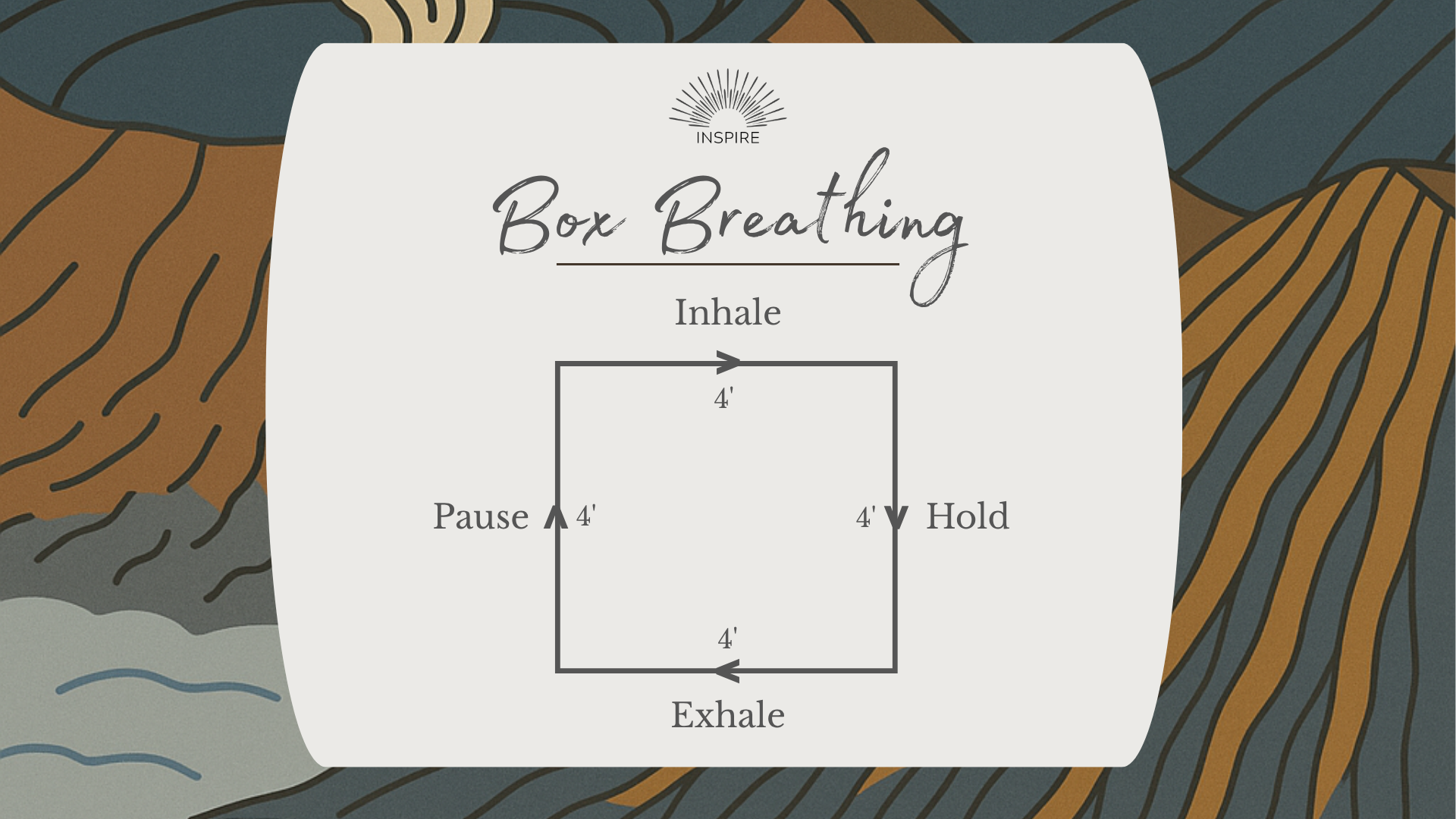
Box breathing, also called four-square breathing or sama vritti pranayama in its yogic roots, follows a simple pattern: inhale for a count of four, hold for a count of four, exhale for a count of four, hold again for a count of four. Picture tracing the four equal sides of a box as you move through each phase, which is where the name comes from.
The evenness is the point. Unlike a technique that emphasises a long exhale, box breathing keeps every phase the same length, creating a steady, predictable rhythm that's easy to follow even when your mind feels scattered.
What the research says
Slow, paced breathing techniques like box breathing are linked to activation of the parasympathetic nervous system, the body's "rest and digest" response, which can support lower cortisol reactivity and better autonomic balance. A clinical trial testing box breathing with emergency department staff during high-pressure shifts found it brief, easy to use, and well tolerated as a quick stress intervention. Research with adolescents has also found that even a short session of paced breathing supported better emotion regulation compared to a control condition.
It's worth being honest about the limits of the evidence too. Box breathing's connection to Navy SEAL training comes from practical, real-world use rather than formal military research trials, and most studies test it as a brief acute intervention rather than a long-term practice. That doesn't make it less useful, just worth holding with reasonable expectations rather than as a cure-all.
How to practice box breathing
Find a comfortable seated position, or lie down if that feels better.
Exhale gently to empty your lungs.
Inhale slowly through your nose for a count of four.
Hold the breath gently for a count of four. No straining, just a pause.
Exhale slowly through your nose or mouth for a count of four.
Hold again, empty, for a count of four.
Repeat for four to ten rounds, or as long as feels steady and comfortable.
If a four-count hold feels like too much at first, it's completely fine to shorten it to two or three counts and build up gradually.
A note on safety
Box breathing is gentle and low-risk for most people. The breath-holding element means it's worth easing in slowly if you're new to breathwork, and if you feel lightheaded, it's fine to skip the holds entirely and simply breathe in a steady four-count rhythm without pausing. If you're pregnant or managing a cardiovascular or respiratory condition, it's worth checking with a doctor before adding breath holds to your routine, and working with a trauma-informed facilitator if you're exploring this alongside more intense practices.
When box breathing is useful
In an acute stressful moment, like before a difficult conversation, a big presentation, or in traffic.
As part of a wind-down routine, especially before sleep.
Alongside other breathwork, as a grounding tool to return to if a deeper practice, like conscious connected breathing, feels like too much in the moment.
Whenever you just need a minute to reset, without any special equipment or preparation.
It isn't about getting the count exactly right
There's no need to be precise to the second, and no failure if your rhythm wobbles or your mind wanders halfway through. Box breathing is a tool, not a test. The value is in returning to it, gently and as often as you need, not in performing it flawlessly.
That same spirit runs through our decolonial approach to breathwork, which questions the idea that healing tools need to be executed perfectly to be worthwhile.
Ready to explore breathwork for yourself?
If a simple structured practice like this feels like a good starting point, Tide Ritual offers a gentle, guided space to go further, alongside others, at a pace that suits you.
Want to explore breathwork beyond the individual?
Even a simple grounding technique like box breathing sits inside bigger questions about how we relate to stress, safety, and our own bodies. Breathing Beyond Empire opens up that exploration through a lens of embodiment, liberation, and collective healing.
Explore Breathing Beyond Empire →

Frequently asked questions
How long should each phase of box breathing last? Four seconds is the traditional count, but it's fine to shorten it to two or three seconds if four feels like a strain, especially when you're starting out.
Is box breathing the same as the 4-7-8 technique? No. The 4-7-8 method uses an extended exhale and no second hold, which creates a different, more sedative effect. Box breathing keeps all four phases equal.
Can box breathing help with panic or anxiety in the moment? Many people find it grounding in an acute stressful moment, since it gives the mind something simple and rhythmic to follow. It's a helpful tool, not a substitute for other support if anxiety is a regular struggle.
How often can I practice box breathing? As often as you like. It's gentle enough to use multiple times a day, whenever you need a moment to reset.
Sources referenced: Cleveland Clinic, "Box Breathing Benefits and Techniques," health.clevelandclinic.org/box-breathing-benefits; Superpower, "Box Breathing: Nervous System Science," superpower.com/guides/mental-wellness/box-breathing-the-evidence-behind-the-navy-seal-technique.
