
Abdominal Breathing vs Chest Breathing: What's the Difference?
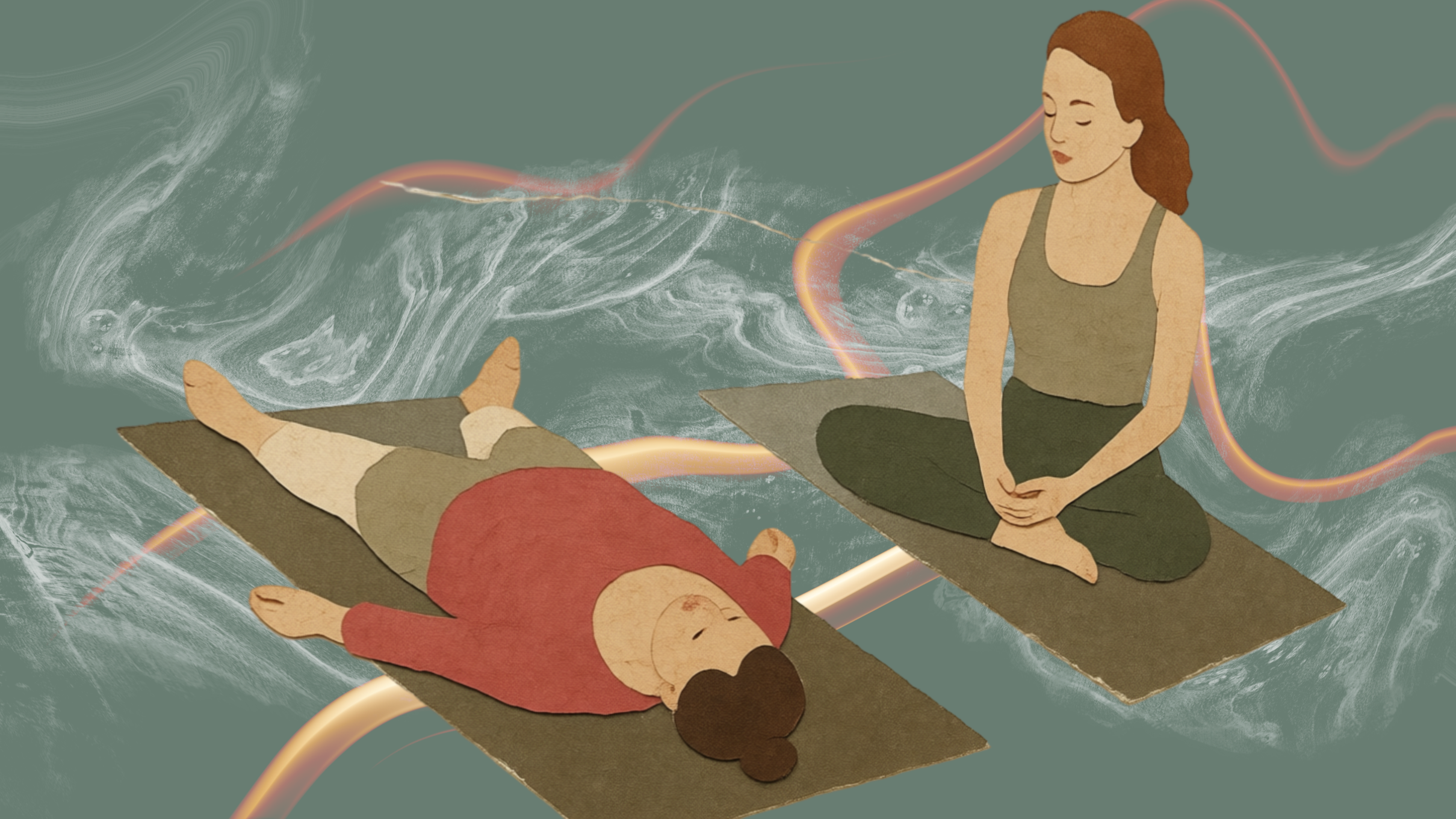
Abdominal breathing vs chest breathing
You are already breathing right now. So here's a simple question worth pausing on: as you read this, is your chest rising and falling, or your belly?
Most of us never think about it. Breath just happens. But where you breathe from, low in the belly or high in the chest, says something real about the state your body is in, and it's one of the simplest places to start if you're curious about breathwork.
What's actually different between the two
Chest breathing, sometimes called thoracic breathing, is shallow and quick. It relies on the muscles around your upper chest and shoulders to pull air in, and it's the pattern most of us default to without noticing, especially under stress. Abdominal breathing, often called belly breathing or diaphragmatic breathing, uses the diaphragm, the large dome-shaped muscle beneath your lungs, to draw air down and out into the lower lungs. Your belly rises, your chest stays relatively still, and the breath tends to slow down on its own.
The diaphragm is actually built to do most of the work of breathing. When it's engaged properly, each breath moves more air with less effort, because the lower lungs have more room to expand than the upper chest does. Chest breathing, by contrast, tends to move a smaller volume of air more often, which is part of why it can leave you feeling short of breath even when you're not doing anything strenuous.
Why this matters beyond the mechanics
The pattern isn't just physical, it's connected to your nervous system. Fast, shallow chest breathing is part of the body's stress response, the same pattern that shows up when you're anxious, startled, or bracing for something. Slower, lower abdominal breathing tends to do the opposite. It signals safety to the body and supports a shift toward rest and digestion rather than fight or flight.
This is a big part of why conscious connected breathwork and other trauma-informed practices pay close attention to where you're breathing from. It isn't about "correct" breathing so much as noticing what your current pattern might be telling you, and having the option to shift it.
Is one pattern actually better than the other?
Not exactly, and it's worth being honest about that. Chest breathing isn't wrong, and it's not something to be ashamed of. It's often just a habit, one that's especially common in people who carry chronic tension, anxiety, or trauma in the body. For some people, especially those recovering from respiratory illness or certain medical conditions, chest breathing might genuinely be doing important work, and forcing a deep belly breath before you're ready can feel uncomfortable rather than calming.
If you're new to noticing this in your own body, a few things worth keeping in mind:
There's no need to force belly breathing if it feels strained or unfamiliar at first. It's a pattern you can build toward gently.
If you have a respiratory condition like asthma or COPD, it's worth learning diaphragmatic breathing with guidance, since some approaches are gentler than others.
Notice rather than judge. The goal isn't to eliminate chest breathing entirely, just to have the choice available.
How to start noticing and shifting your own pattern
Check in first. Lie down or sit comfortably. Place one hand on your chest and one on your belly. Just breathe normally for a minute and notice which hand moves more.
Slow it down. Without forcing anything, let your next inhale come in a little slower through your nose.
Let the belly lead. See if you can let your lower hand rise before your upper hand does, without straining.
Lengthen the exhale. A slightly longer exhale than inhale tends to deepen the shift toward calm.
Practice in short stretches. Even five minutes a day, lying down with your hands in place, is enough to start building familiarity with this pattern.
For a more structured practice, our guide to diaphragmatic breathing exercises walks through this in more depth.
It isn't about breathing perfectly
There's no gold-standard breath you're meant to arrive at, and no failure in noticing that your chest is doing most of the work today. This is a practice of awareness, not performance. The more you get curious about your own pattern without judging it, the more choice you build for yourself over time, which is really what breathwork is about at its core.
That question of choice and agency in the body runs through a lot of what we teach, including our decolonial approach to breathwork, which looks at how we've been taught to relate to our own bodies in the first place.
Ready to explore breathwork for yourself?
If noticing your own breath has sparked something, Tide Ritual offers a gentle, guided space to go deeper into that exploration alongside others, at your own pace.
Want to explore breathwork beyond the individual?
Even something as simple as where you breathe from connects to bigger questions: how we were taught to hold our bodies, and what it might mean to unlearn that. Breathing Beyond Empire opens up that exploration through a lens of embodiment, liberation, and collective healing.
Explore Breathing Beyond Empire →

Frequently asked questions
Is chest breathing bad for you? Not inherently. It's a normal pattern, and it becomes a concern mainly when it's the only pattern available to you, especially under everyday, non-stressful conditions.
How do I know if I'm a chest breather? Try the two-hand check: one hand on your chest, one on your belly. If your chest hand moves noticeably more than your belly hand during normal breathing, you're likely breathing mostly from the chest.
Can switching to abdominal breathing help with anxiety? Many people find it helpful, since slower, lower breathing supports the body's parasympathetic, or "rest and digest," response. It isn't a cure, but it's a genuinely useful tool alongside other support.
How long does it take to build a new breathing habit? It varies. Some people notice a shift within a few sessions, others take weeks of gentle, regular practice. There's no fixed timeline, and there's no rush.
Sources referenced: American Lung Association, "Breathing Exercises for Better Lung Health," lung.org/lung-health-diseases/wellness/breathing-exercises.
